

Introduction
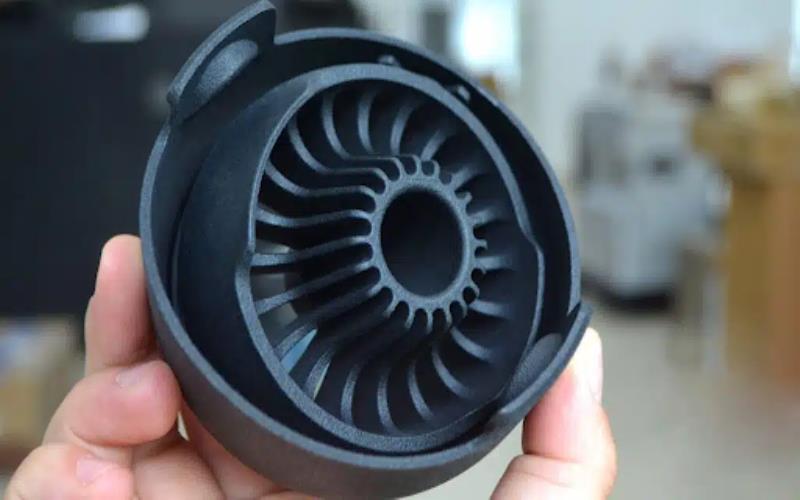
HP Jet Fusion 3D printing is a high-speed, powder-based 3D printing technology that produces strong, functional parts with excellent detail resolution and surface quality. Unlike traditional manufacturing or other 3D printing methods like SLS or FDM, MJF enables isotropic strength, fine feature resolution, and efficient material usage.
However, to fully leverage MJF’s benefits, designs must follow specific guidelines. This article covers the key best practices to ensure optimal performance, accuracy, and cost-effectiveness in MJF-printed parts.
1. Material Selection Matters
The mechanical properties of an MJF-printed part depend on the chosen material.
- Nylon PA12: High strength, chemical resistance, ideal for mechanical components.
- Nylon PA11: More flexible and impact-resistant, great for snap-fit parts.
- TPU: Rubber-like flexibility, best for gaskets and soft-touch applications.
Selecting the right material ensures your part meets performance requirements for strength, flexibility, or wear resistance.
2. Wall Thickness and Structural Integrity
Recommended Wall Thickness
- Minimum: 0.3 mm (XY plane), 0.5 mm (Z direction)
- Larger flat surfaces: Increase thickness to reduce warping
- Thin, unsupported structures: Add fillets or ribs for reinforcement
Cantilevered Features
- Keep the aspect ratio ≤1 (length/width) for small cantilevers.
- For longer spans, add support ribs or increase thickness.
Long, Thin Parts
- Maintain an aspect ratio below 10:1 to prevent warping.
- Use internal lattice structures to distribute heat and stress.
3. Designing for Assembly and Moving Parts
Tolerances for Mating Parts
- Maintain at least 0.4 mm clearance to accommodate material shrinkage.
- For snap-fit components, leave a slight interference fit for secure connections.
Moving Parts and Hinges
- Leave 0.7 mm clearance to prevent fused connections.
- For thin-walled components (<3 mm), reduce clearance to 0.3 mm, but test fit.
4. Lightweighting Strategies
Reducing weight without compromising strength is crucial for aerospace, automotive, and industrial applications.
Hollowing Techniques
- Remove excess internal material, leaving minimum 2 mm walls.
- Add drain holes (≥5 mm diameter) for easy powder removal.
Lattice Structures
- Reduce material usage while maintaining strength.
- Ensure minimum 5 mm gaps to allow unfused powder to escape.
Topology Optimization
- Use Finite Element Analysis (FEA) to identify non-critical areas where material can be removed.
- Ideal for high-performance, weight-sensitive applications.
5. Achieving High Dimensional Accuracy
MJF achieves IT Grade 13 tolerances, with accuracy comparable to injection molding.
- Place critical features in the same plane to improve precision.
- Embossed and engraved text should be at least 1 mm deep or tall.
- Avoid long, thin features prone to thermal distortion.
For high-precision applications, testing and slight dimensional adjustments help ensure optimal fit.
6. Surface Quality and Aesthetics
HP Jet Fusion prints at 80 µm layer resolution, minimizing visible layer lines, but part orientation affects surface finish.
- Avoid shallow angles (<20°) to minimize visible stepping.
- Orient parts strategically to place the smoothest surfaces outward.
- Use bead blasting or vapor smoothing for a refined finish.
For consumer-facing products, post-processing like dyeing or chemical smoothing improves aesthetics.
7. Post-Processing for MJF Parts
After printing, cleaning and finishing steps ensure optimal functionality and appearance.
Powder Removal
- Hollow parts must have drain holes (≥5 mm) for easy powder extraction.
- Internal ducts should be cleaned with a flexible screw or bead blasting.
Surface Treatments
- Bead blasting smooths surfaces and removes excess powder.
- Dyeing adds uniform color without affecting mechanical properties.
- Vapor smoothing creates a sealed, glossier finish for watertight applications.
Conclusion: Optimizing for Success with HP Jet Fusion
Following these best practices ensures MJF-printed parts are strong, accurate, and cost-effective, whether for functional prototypes or full-scale production.
By optimizing wall thickness, assembly tolerances, and lightweighting strategies, engineers can maximize the mechanical performance, efficiency, and aesthetics of their designs.
If you’re ready to take advantage of HP Jet Fusion 3D printing, partnering with an experienced provider can help ensure the best results.
Partner with RapidMade for Expert HP Jet Fusion 3D Printing
At RapidMade, we offer:
✔ Expert design consultation for MJF optimization
✔ High-quality prototyping and production
✔ Custom post-processing and finishing services
🔗 Visit RapidMade.com to request a quote or speak with an expert!
